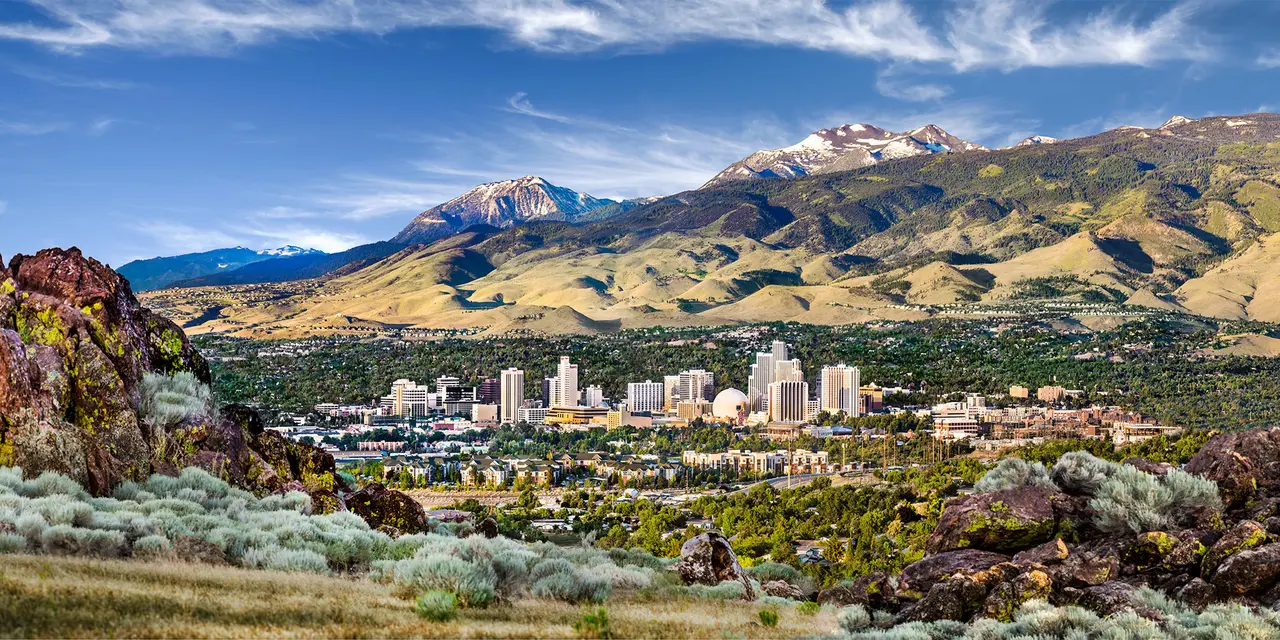
Stead works when the assignment needs a working edge district rather than a downtown or resort story. The area is about movement, service access, and spaces that make logistics easier to control.
In Reno, Stead is a working operational zone with its own pace. The airpark, industrial parcels, and storage corridors set the rhythm — not downtown traffic patterns.
The Reno event landscape
Reno carries one of the heaviest convention calendars in the western US. Hotel inventory is scarce on overlap weeks, and the building decides what is possible for the location.
When the budget shrinks, the standards can't. The location either shows up sharp on a tight number or shows up dull on a generous one. Specific planning is what makes the difference.
The buildings that host Reno events
Each Reno venue brings its own floor plan, labor scheme, and freight constraints. The location matches the building.
A venue walk — in person or via the published floor plan — surfaces what no spec sheet does. Column spacing, real ceiling at the grid point, and dock access set what the location can actually do.
Reno-Sparks Livestock Events Center is one of the anchors.
Reno-Sparks Livestock Events Center suits large consumer shows, motorsports and outdoor equipment events, equestrian and agricultural programs, festival style activations.
Grand Sierra Resort and Casino. It has more than 200,000 square feet of flexible meeting space and 45 meeting rooms.
Peppermill Resort Spa Casino: it has 106,000 square feet of meeting space.
How Reno floor operations work
Labor jurisdictions in Reno are venue-specific, not citywide. Each building's manual sets the rules the location has to clear.
location labor at most Reno shows takes three actions: call exhibitor services, read the current manual, email the GC. Skip any one and surprises start.
Practical planning rules for Stead, NV in Reno: Convention-center and resort programs usually benefit from early coordination on utilities, freight access, storage, move-in timing, and venue approvals.
Line items on a typical project
A small team and short handoffs are the simplest way to keep the location on rails. Every extra vendor in the chain is another place context can drop.
Excluded by default: show organizer fees, booth lease, staff travel, per diems, and any data tooling the client owns. The location coordinates with those, but the line items live on the client side.
How a project runs
With those locked in and the location clearly framed, a real plan can come back inside the week.
After the brief, attention moves to the venue.
Once the venue details are confirmed, production starts.
One person, named at kickoff, runs the install. Floor plan, punch list, labor calls — all theirs from crate-open to dock-close.
Through every show hour, the lead remains on the floor. Tech failures, sponsor swaps, building requests get handled by the location team without pulling client staff off conversations.
Pricing and scheduling
Pricing is built from a consistent set of variables across all projects. The location determines where each variable lands.
The location affects how each lever weighs in.
Lead-time benchmarks: custom builds run cleanest at 16 to 20 weeks; rentals at 8 to 12; anything inside 4 weeks is a rush with fewer material choices and rush premiums priced in.
What a successful project looks like
The location is built to support those numbers; it is not the number itself.
Debriefs connect numbers to physical booth elements: which demo earned traffic, which meeting area closed deals, which graphic zone slowed people down. That data drives the next iteration of the location.
What makes our work different
An in-house team in Reno covers design, fab, print, and on-site execution. Single shop, single PM, single show-site lead — the location stays under one roof.
The case for a Reno-based partner is real-world recovery: when a location component fails on the floor, the fix is across town, not across the country.
By show four, the location runs from notes and muscle memory rather than first principles.
About Stead, NV
Stead, NV is one of the Reno area submarkets we cover for trade show work.
Stead, NV sits in the North Valleys and West I-80 Logistics Belt area.
Frequently asked questions
Do you work at Nugget Casino Resort?
Yes. It offers more than 110,000 square feet of meeting and convention space in Sparks, Nevada.
How does labor work in Reno?
It runs venue by venue.
How does this submarket affect freight and hotel logistics?
Distance from the convention center, freight access for box trucks and 53-foot trailers, and hotel block proximity all shape the plan. The freight estimate is based on the actual routing for the working address, not a Reno average.
Are there local permits or right-of-way issues to watch?
City and county permits cover sidewalk closures, oversize loads, generator use, and any branded activation that pulls power off the venue grid. Permits are filed alongside the venue paperwork rather than left to the last week.
What's the closest rigging and graphics vendor footprint?
The work routes through Reno-based shops with Reno-Tahoe stock on hand. Same-day reprints, replacement parts, and emergency rigging crews are within driving distance — not flown in from out of region.