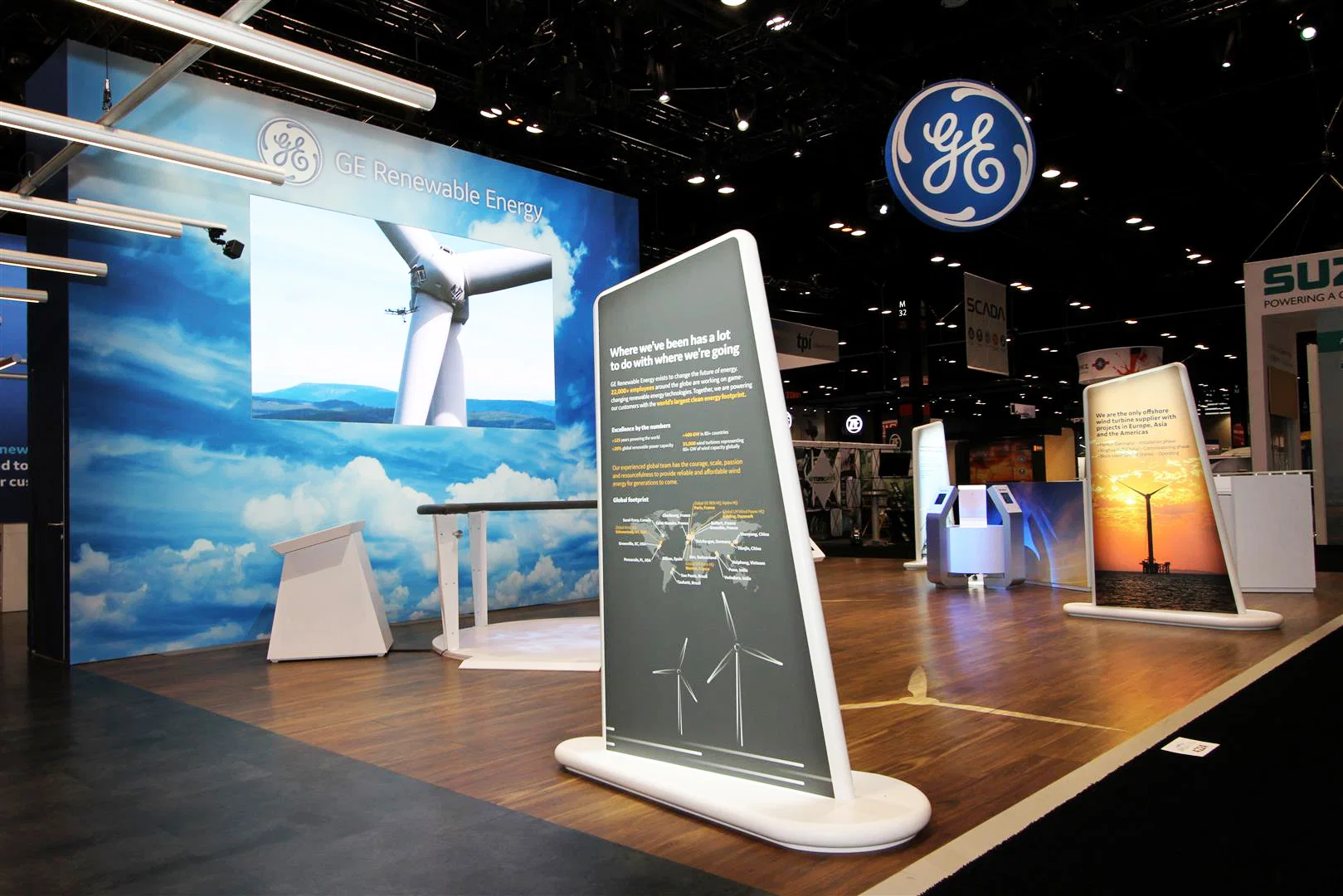
Show-site supervision is what turns a well-planned event into a well-run one. The field still needs somebody who can see the whole room, resolve issues quickly, and keep the client from getting dragged into every small correction.
In Reno, the supervision works best when one lead owns the live picture instead of watching problems bounce between vendors.
Reno trade show market
Pace in Reno is quick. Venues book out, freight windows tighten, and the service works only when the plan is already locked before show week starts.
Planning the service late means losing real setup hours.
the Reno-Sparks Convention Center includes more than 600,000 square feet of flexible space and 381,000 square feet of exhibit halls — a useful reference point when sizing a project.
Where Reno shows actually happen
On the service, the building is the biggest variable in the plan. A small set of Reno venues carry most of the calendar.
Different shows want different buildings. Open aisles, controlled breakouts, or scenic-friendly architecture — the service matches the show's needs to the right venue.
Rancharrah. The Event Room handles roughly 85 to 100 guests while the Backyard can host up to 500 guests.
Tahoe Blue Event Center is one of the anchors. It has more than 50,000 square feet of total meeting, convention, and exhibition space.
Who handles what during the Reno install window
When a Reno install goes sideways, labor is usually the root cause. The service stays inside the venue's published rules for the show in question.
On the service, the workable labor approach is unsexy: manual review, scope-to-category mapping, direct venue ordering, schedule alignment. Issues come from steps people skip.
Lake Tahoe and special-event spaces typically route F&B, production, and decor through in-house or pre-approved teams. The service reads each venue's published rules — they vary by facility, organizer, and format.
Reno neighborhoods and event districts
The Sparks and East Truckee Meadows area runs through Sparks, Victorian Square, Spanish Springs, Sun Valley.
North Valleys and West I-80 Logistics Belt — North Valleys, Stead, Lemmon Valley — is a different environment.
Scope on a show-site supervision project
From scope through dismantle, the service runs end to end — design, fabrication or rental, print, services, logistics, on-site labor.
Cost categories that nearly always appear: structure or rental kit, graphics, audiovisual, the venue's own service charges, labor, freight, supervision, and a closeout line. The service dictates which of these dominate.
The number of surprises on install day is a leading indicator of how the upstream handoffs went. Clean handoffs, fewer surprises — every time.
Programs spanning more than one show pull in storage, refresh cycles, graphic updates, and re-kitting. Done well, the service ships out of Reno already prepped for the next venue.
Out of scope unless flagged otherwise: organizer charges, the booth lease itself, client travel costs, and any data-capture or CRM tooling the client owns. Those connect to the service via coordination only.
From first call to strike
Project start on the service: venue, dates, footprint, target outcome. From there, a plan can be drafted that matches reality.
After the brief, attention moves to the venue.
Production runs longest on the service — fabrication, graphics, AV spec, rentals, crew chief named. Timeline either holds or doesn't, based on the upstream handoffs.
Install: one lead, one accountable owner. The service runs through them with a daily status update to the client.
While doors are open, the lead is present and on call. Tech breaks, sponsor edits, venue requests — all absorbed by the service team, not the client.
Same-day work on the service's back end: strike, storage labels, outbound manifests, vendor performance notes, written debrief — all inside 24 hours of doors closing.
Budget and timeline
Cost drivers are the same on every project — the total just depends on how the service's scope sets each variable.
Six levers shape the service number: build type, footprint and complexity, venue labor and rigging, graphics scope and substrate, freight, supervision days.
Time on the service is leverage. 16-20 weeks for custom, 8-12 for rental, sub-4 weeks limits everything.
What a successful project looks like
Lead volume, floor meetings, qualified pipeline — those are the Reno program metrics. The service is the platform that supports them.
Real service performance is clear by week-after-show — clearer than any projection. Those notes get documented alongside the technical closeout for the next cycle.
The advantage of a local Reno team
Trade Show Services of Reno runs design, build, and install as one team for every service. Continuity of crew and playbook keeps quality predictable.
Reno-based execution matters most at 6 a.m. On install day. The service can pull a graphic reprint or part swap from a local shop instead of overnighting it.
Local continuity matters on repeat dates. The service is built, installed, and packed by the same hands.
Frequently asked questions
Do you work at National Bowling Stadium?
Yes.
How does labor work in Reno?
It runs venue by venue. At Grand Sierra Resort and Casino, exhibitors and planners should coordinate package routing with FedEx Office and the event manager, and that drayage-company or decorator shipments may incur handling fees or vendor-routing requirements.
What scope is locked before fabrication starts?
Booth design, materials, graphics layout, AV spec, freight routing, and the venue service orders are signed off before tooling. Skipping any of those puts the timeline and the budget at risk.
How are change orders handled mid-project?
Each change runs through a single owner with cost, schedule, and venue impact attached. Approval is in writing and lands in the project log so nothing slips through the gaps between shops.
Do you self-perform install or rely on local crews?
A combination. The lead crew comes in with the project.