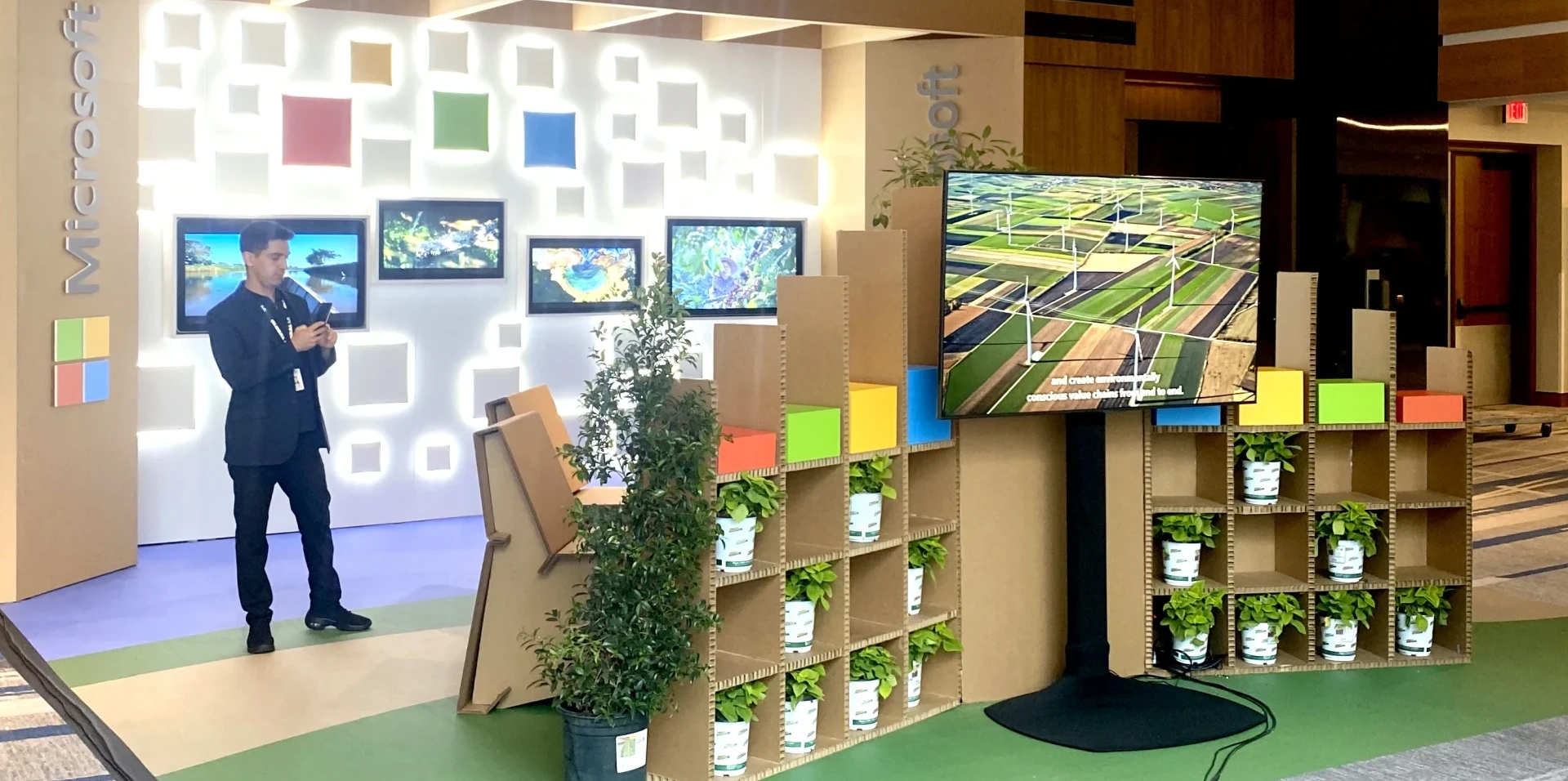
Activations work when the audience understands what to do, why to do it, and what they get back within a few seconds of seeing the experience.
In Reno, Experiential Brand Activations works best when traffic, staffing, and recap value are all designed into the interaction before scenic ideas start multiplying.
The Reno event landscape
Reno's show calendar runs hot. Convention weeks fall on top of each other, hotels are short, and each venue decides what the service can and can't do.
Smaller budgets in Reno still mean showing up next to competitors on the same aisle. Scope gets tighter, but standards don't move. The booths that perform are built to a specific plan, not from a template.
the market has more than 15,000 hotel rooms and 10-plus major partner resorts — a useful reference point when sizing a project.
The buildings that host Reno events
Reno venues differ on floor plans, labor rules, and freight logistics — the service adjusts per building.
Match the venue to the show: open-aisle floors for consumer expos, breakout-rich layouts for conferences, scenic-tolerant spaces for activations. The service aligns to that.
National Automobile Museum: gallery Four offers 12,000 square feet of event space.
Gallery Four handles up to 300 seated or 600 standing guests and includes a stage, two video walls, and an LED center screen.
National Automobile Museum suits automotive themed events, product reveals, receptions, presentation led off sites.
Rancharrah. The Event Room handles roughly 85 to 100 guests while the Backyard can host up to 500 guests.
What makes our work different
Trade Show Services of Reno runs design, build, and install as one team for every service. Continuity of crew and playbook keeps quality predictable.
Local matters most when something goes wrong on the floor — the fix is a drive away, not a flight away.
Local continuity matters on repeat dates. The service is built, installed, and packed by the same hands.
How Reno floor operations work
Reno labor runs building-by-building. Each venue publishes its own rules for who handles what, and the service plan adjusts per building.
The boring approach to service labor on Reno floors: read manual, match categories, direct-order, schedule around posted windows. Skipping any step is where surprises start.
Practical planning rules for the activations in Reno: Convention-center and resort programs usually benefit from early coordination on utilities, freight access, storage, move-in timing, and venue approvals. Lake Tahoe and special-event venues often route food, beverage, production, and decor through in-house or approved teams.
The main Reno event areas
Carson City and Carson Valley Extension covers Carson City, Minden, Gardnerville, Dayton.
North Lake Tahoe runs across Incline Village, Crystal Bay, Tahoe City. Supports executive retreats, incentive programs, and North Tahoe off-sites led by resorts, clubs, and scenic venues.
Line items on a typical project
The service runs end to end — scope development through dismantle, with fabrication or rental, print, services, logistics, and on-site execution all in scope.
The handoffs on an the activations project matter almost as much as the line items. Design has to hand a build-ready drawing to fabrication. Every handoff is a place quality can drop.
Sharp scope definitions list exclusions: organizer charges, client travel, and any vendor relationships the client already has (lead capture, CRM, giveaways). The service coordinates with them rather than rebilling them.
How a project runs
Every service starts with four data points on the table: venue, show dates, footprint, target outcome. With those, a real plan exists.
From the brief, the project moves to the building. Dock window, utilities, rigging approval, labor call — all confirmed in writing before tools touch the service.
Production covers fabrication, graphics, AV spec, rentals, and crew-chief assignment for the service. It's the longest phase and the one where timelines are protected or lost.
Install: one lead, one accountable owner. The service runs through them with a daily status update to the client.
While doors are open, the lead is present and on call. Tech breaks, sponsor edits, venue requests — all absorbed by the service team, not the client.
Strike happens the day doors close on the service; closeout follows the same window.
Pricing and scheduling
Cost drivers don't change project to project. What changes is how the service sets the scope for each one.
Cost on the service is driven by six levers: custom vs rental, footprint, venue labor and rigging fees, graphics scope, freight, supervision days.
service lead times: 16-20 weeks for custom, 8-12 for rental, under 4 raises rush cost and shrinks options.
Outcomes we optimize for
Success is binary on each of four metrics: on-time install, no callouts, clean show hours, repeatable closeout. The service is judged against all four.
Reno programs measure lead volume, floor meeting count, and post-show pipeline. The service platforms those numbers; it isn't the score.
Real service performance is clear by week-after-show — clearer than any projection. Those notes get documented alongside the technical closeout for the next cycle.
Frequently asked questions
Do you work at Bowl Incline?
Yes. The venue handles corporate gatherings and other special events.
How does labor work in Reno?
It runs venue by venue.
Do you self-perform install or rely on local crews?
A combination. The lead crew comes in with the project.
What's billed flat versus pass-through?
Design, project management, fabrication, supervision days, and freight are flat. Venue services, drayage, electrical, rigging, and union labor pass through at venue rates with a clear estimate up front.
How is the working budget set?
Two passes.