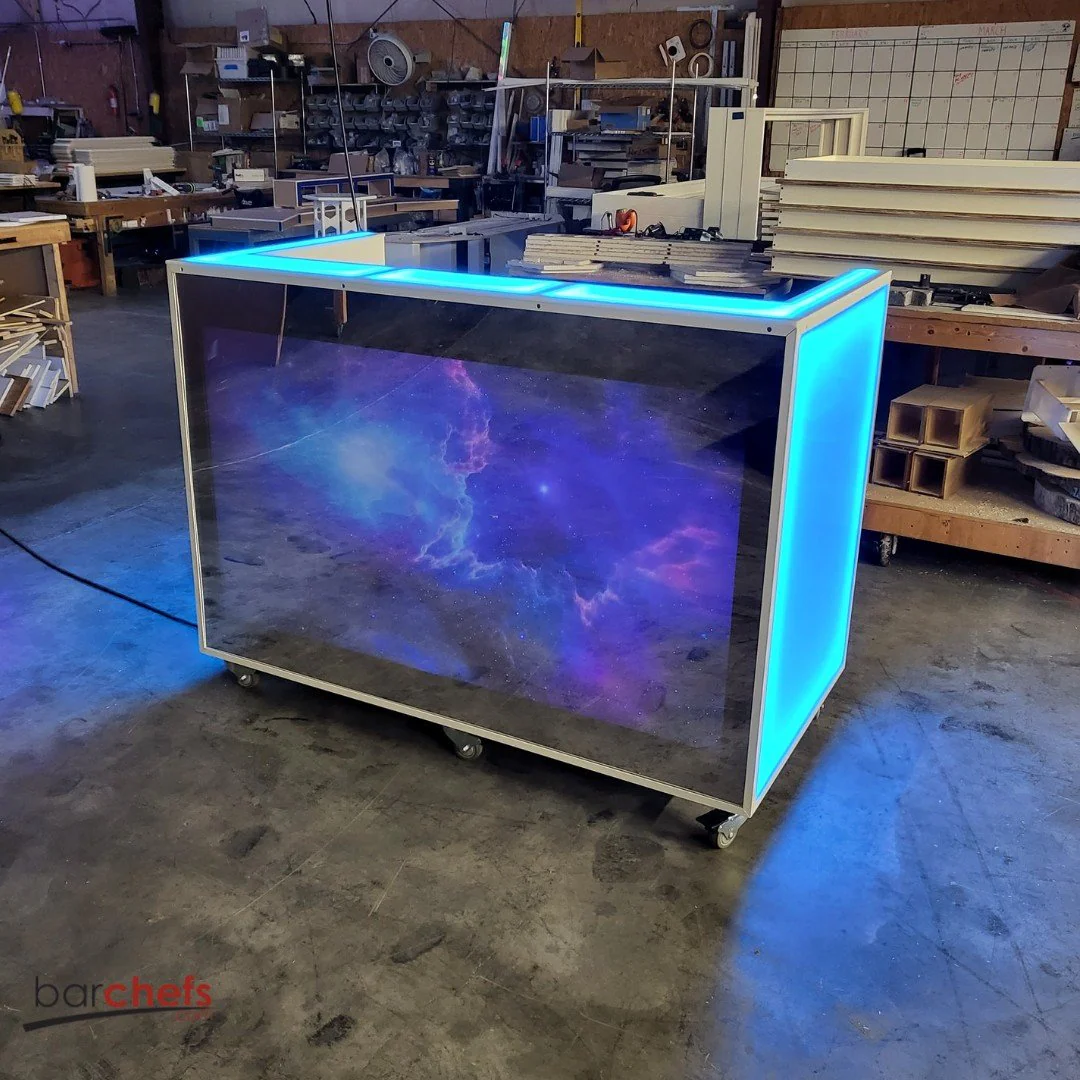
Lighting and power are invisible only when they are planned well. When they are loose, the audience notices glare, dead corners, buzzing fixtures, or a field crew still solving cable paths after the booth should be open.
In Reno, Lighting and Power Distribution works best when load planning, fixture placement, and guest-facing atmosphere are designed at the same time.
Reno as a trade show city
Exhibiting in Reno means working inside an established ecosystem. The service navigates predictable venues, labor models, and local production capacity.
Reno's trade show weeks compress every decision. Docks are finite, rigging slots fill fast, and labor runs hot around citywide events. Exhibitors planning loosely lose hours they can't get back.
Reno Tahoe has 130-plus daily flights and more than 20 nonstop routes.
Reno convention venues and meeting properties
The differences between Reno venues sit in labor, rigging, drayage, and move-in window. The service reads each one and adapts.
Tahoe Blue Event Center: it has more than 50,000 square feet of total meeting, convention, and exhibition space.
A 26,984-square-foot arena floor, about 10,000 square feet of meeting-room space, and concourse plus club areas for pre-function use.
Tahoe Blue Event Center suits South Lake Tahoe conventions, exhibits on the arena floor, general sessions, mountain destination conferences.
Hyatt Regency Lake Tahoe Resort, Spa and Casino.
Edgewood Tahoe Resort is one of the anchors. It offers up to 7,000 square feet of scalable meeting space across the Lodge and Clubhouse.
Why Trade Show Services of Reno
On the service, design, build, and install share one team and one playbook — that's the lever that keeps quality steady through show week.
The case for a Reno-based partner is real-world recovery: when a service component fails on the floor, the fix is across town, not across the country.
The other case for local: continuity. The crew that built the service also installs and packs it.
Reno labor and venue services
There is no single labor model for Reno trade shows.
Each show, a fresh exhibitor manual gets pulled and three lines get confirmed: house labor scope, GC scope, and exhibitor-or-contractor scope. Nothing on a Reno floor is assumed; everything is documented.
At Grand Sierra Resort and Casino, exhibitors and planners should coordinate package routing with FedEx Office and the event manager, and that drayage-company or decorator shipments may incur handling fees or vendor-routing requirements.
Market flexibility doesn't substitute for venue specifics on the service. Docks, security, AV, catering, packages, exhibitor services all run by building rules. Early coordination clears the path.
Where Reno shows cluster
The Carson City and Carson Valley Extension area runs through Carson City, Minden, Gardnerville, Dayton.
North Lake Tahoe — Incline Village, Crystal Bay, Tahoe City — is a different environment. Supports executive retreats, incentive programs, and North Tahoe off-sites led by resorts, clubs, and scenic venues.
Scope on a lighting and power distribution project
From design through strike, the scope is consistent: design, fabrication, graphics, AV, labor, freight, install, show-hours, dismantle. Where the service sits in that chain shapes which phases carry the most risk.
Budgets are usually built from eight blocks: structure, graphics, AV, venue services, labor, freight, supervision, closeout. The service determines which block carries the most weight.
A well-run service has few install-day surprises because the upstream handoffs were tight. A poorly-run one has many, for the opposite reason.
The service stays in production-ready condition between dates.
What does not pass through the project: show organizer fees, booth lease payments, client team travel, client-owned software or lead-capture tools. They stay on the client side and integrate via coordination.
The process from start to finish
Project start on the service: venue, dates, footprint, target outcome. From there, a plan can be drafted that matches reality.
service production: fab, print, AV spec, rentals, crew chief named. Longest single phase; timeline integrity rises and falls inside it.
Install owner: one named lead. They drive the plan, run the punch list live, and report status up daily on the service.
While doors are open, the lead is present and on call. Tech breaks, sponsor edits, venue requests — all absorbed by the service team, not the client.
Same-day strike and closeout for the service: storage labels, outbound manifests, vendor performance notes, written debrief — all out within 24 hours.
Cost and lead time
Cost drivers don't change project to project. What changes is how the service sets the scope for each one.
Six levers shape the service number: build type, footprint and complexity, venue labor and rigging, graphics scope and substrate, freight, supervision days.
Lead-time math drives the service: custom 16-20, rental 8-12, sub-4 is rush territory with limited options.
What a successful project looks like
A successful project measures up on four points: on-time install, no venue infractions, clean show hours, and documentation that simplifies the next event.
Three KPIs typically run a Reno program: lead capture, on-floor meetings, post-show pipeline. The service feeds those numbers; it doesn't replace them.
A week after doors close, the service's real performance is documented and joined to closeout — that's how the next cycle inherits real signal instead of vague memory.
Frequently asked questions
Do you work at Silver Legacy Resort Casino?
Yes. Silver Legacy Resort Casino is part of THE ROW, a connected three-resort complex in downtown Reno that includes Circus and Eldorado.
How does labor work in Reno?
It runs venue by venue.
How is the working budget set?
Two passes.
Who owns the post-show closeout?
The same project lead who ran the install.
How do you protect the timeline if a vendor slips?
Critical-path items have a backup shop named at kickoff.