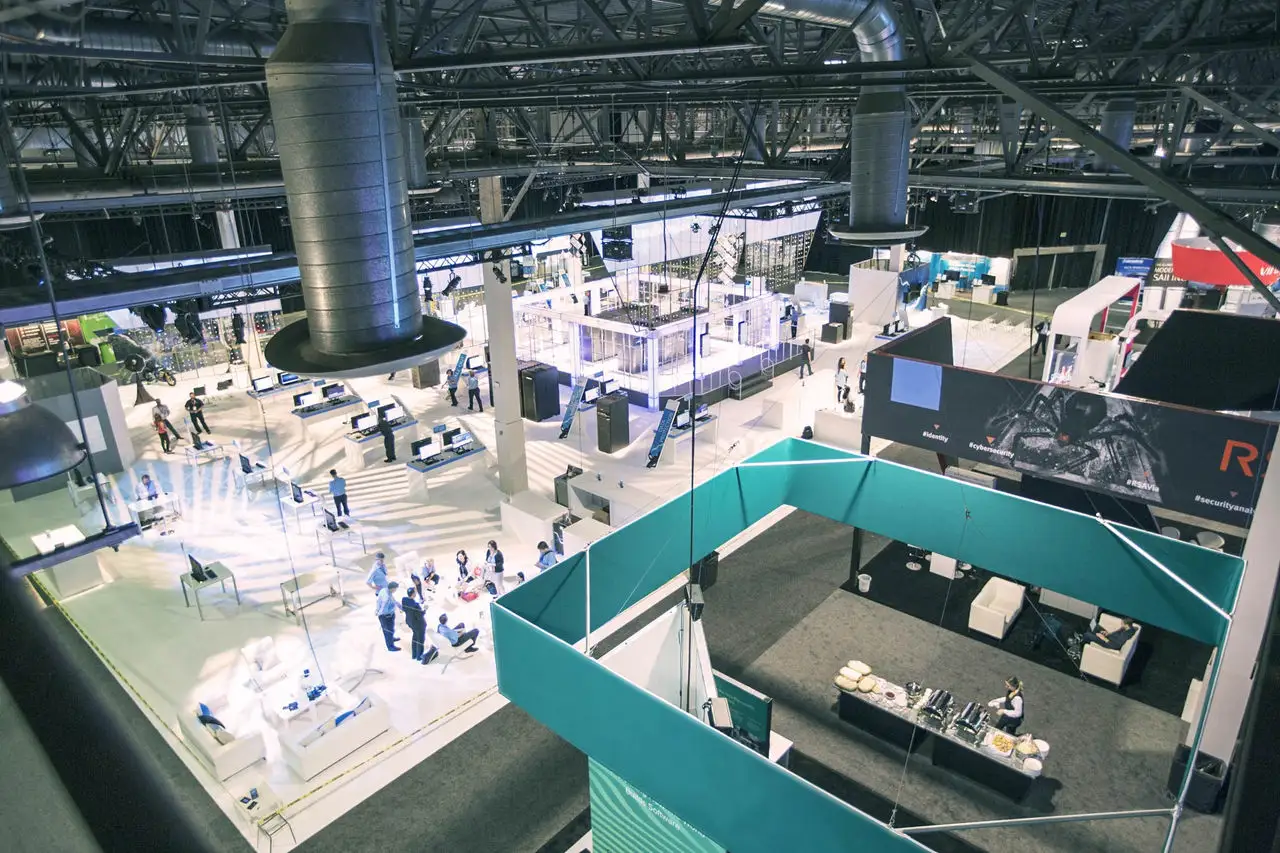
Registration is the first operational truth guests feel. If arrival, check-in, queue choice, and wayfinding are loose, the whole event starts under a cloud even if the rest of the build is strong.
In Reno, Registration Lobbies and Attendee Flow works best when the front-of-house plan is designed around traffic volume, badge behavior, and what the guest needs to understand in the first minute.
What drives the Reno calendar
The Reno calendar packs convention weeks back-to-back, with hotel blocks fighting for the same nights. Each venue's particulars then shape what a service can do on the floor.
Exhibitors trimming budget for Reno still face full-budget competitors on the same floor. The win comes from precision in the service, not from a generic template build.
the destination has more than 1 million square feet of CVB-managed meeting space across four managed venues, which sets the practical ceiling for a booth program working the market.
The buildings that host Reno events
Different Reno buildings, different floor plans, labor jurisdictions, and freight realities. The service flexes to whichever venue is in play.
Building selection follows show type. Consumer expos lean toward broad aisles, corporate conferences toward breakout space, activations toward scenic-tolerant architecture. The service factors into that choice.
Hyatt Regency Lake Tahoe Resort, Spa and Casino.
The conference center includes seven event spaces plus the Regency Ballroom for larger banquet or general-session use.
Hyatt Regency Lake Tahoe Resort, Spa and Casino suits resort conferences, executive retreats, board meetings, incentive and hospitality programs.
Edgewood Tahoe Resort is one of the anchors.
Bowl Incline: the property totals roughly 17,900 square feet and includes a 3,000-square-foot upstairs lounge.
How Reno floor operations work
Each Reno venue runs its own labor playbook. The service respects whatever rules the building publishes — not whatever the last show used.
Practical planning rules for the flow in Reno: Convention-center and resort programs usually benefit from early coordination on utilities, freight access, storage, move-in timing, and venue approvals.
Reno neighborhoods and event districts
Sparks, Victorian Square, Spanish Springs, Sun Valley form the Sparks and East Truckee Meadows cluster. Covers Sparks-based hospitality, event overflow, and east-side service demand that feeds Reno programs and regional venues.
North Valleys and West I-80 Logistics Belt runs across North Valleys, Stead, Lemmon Valley.
Line items on a typical project
Good execution comes from a small team and short handoffs. Every extra vendor in the chain adds a layer where service details get lost.
When a service repeats across the calendar, asset management gets built into the contract: storage, graphic rotations, refurbishment cycles, and re-crating are scheduled rather than improvised.
Out-of-scope items: show organizer charges, booth lease, client travel and per diems, plus any in-house software stack. The service plugs into them through documentation rather than invoicing.
How a project runs
The service kicks off the same way each time — venue, dates, footprint, target outcome. Those four inputs are enough to build a real plan.
After the brief, attention moves to the venue.
Production phase for the service consumes the most calendar — fabrication, graphics, AV, rentals, and the crew chief get locked here. Timeline integrity hinges on it.
Install owner: one named lead. They drive the plan, run the punch list live, and report status up daily on the service.
While doors are open, the lead is present and on call. Tech breaks, sponsor edits, venue requests — all absorbed by the service team, not the client.
Same-day work on the service's back end: strike, storage labels, outbound manifests, vendor performance notes, written debrief — all inside 24 hours of doors closing.
What it costs and how fast it moves
Every project pulls from the same cost lever set. The service's scope determines where each lever is set.
service cost levers: custom vs rental, footprint and complexity, venue labor and rigging fees, graphics scope and substrate, freight distance and timing, supervision day count.
service lead times: 16-20 weeks for custom, 8-12 for rental, under 4 raises rush cost and shrinks options.
Outcomes we optimize for
The bar is simple — install lands on time, the venue raises no flags, show hours run without incident, and the closeout makes the next service faster to brief.
Evaluation on Reno programs runs leads, meetings, pipeline. The service is the platform; the actual score comes from the floor team.
A week after doors close, the service's real performance is documented and joined to closeout — that's how the next cycle inherits real signal instead of vague memory.
How we're built to run your project
Trade Show Services of Reno runs design, build, and install as one team for every service. Continuity of crew and playbook keeps quality predictable.
Reno-based execution matters most at 6 a.m. On install day. The service can pull a graphic reprint or part swap from a local shop instead of overnighting it.
Local continuity matters on repeat dates. The service is built, installed, and packed by the same hands.
Frequently asked questions
Do you work at Peppermill Resort Spa Casino?
Yes. it has 106,000 square feet of meeting space.
How does labor work in Reno?
It runs venue by venue.
How are change orders handled mid-project?
Each change runs through a single owner with cost, schedule, and venue impact attached. Approval is in writing and lands in the project log so nothing slips through the gaps between shops.
Do you self-perform install or rely on local crews?
A combination. The lead crew comes in with the project.
What's billed flat versus pass-through?
Design, project management, fabrication, supervision days, and freight are flat. Venue services, drayage, electrical, rigging, and union labor pass through at venue rates with a clear estimate up front.